
An Impact Driver Is Essential
There is nothing particularly difficult about the conversion itself, but one task is difficult without a special tool: removing the countersunk screws that secure the brake rotors.
On a low-mileage car, a few blows to a striking screwdriver may be enough to loosen them. On a car as old as the NSX, however, they are usually seized, and the screw heads tend to strip before you can apply enough torque to loosen them.
This is where a manual impact driver comes in. Striking the end of its handle with a hammer converts the impact force into rotational force.
I would therefore recommend having an impact driver ready before starting the job.
Otherwise, the main thing to watch out for is having enough working space to apply sufficient force, since some of the mounting bolts may also be seized and difficult to loosen.
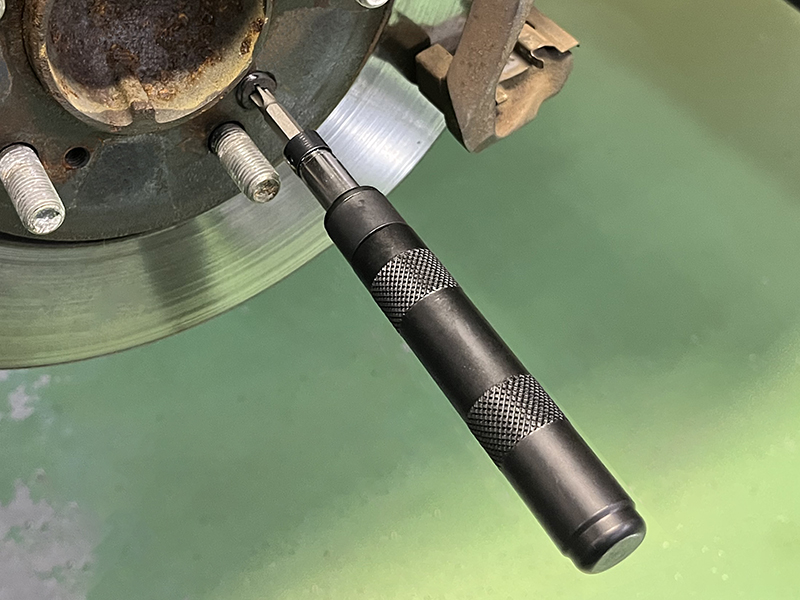
Loosening rotor screws with an impact driver
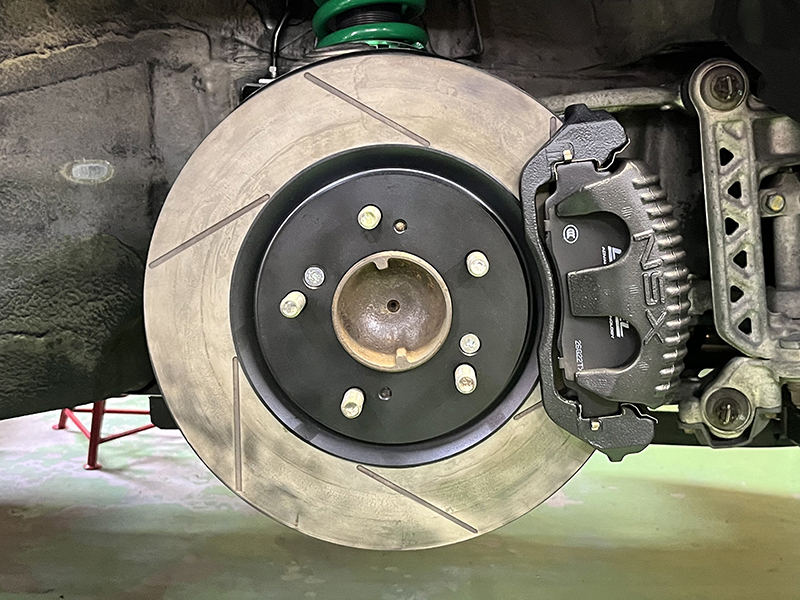
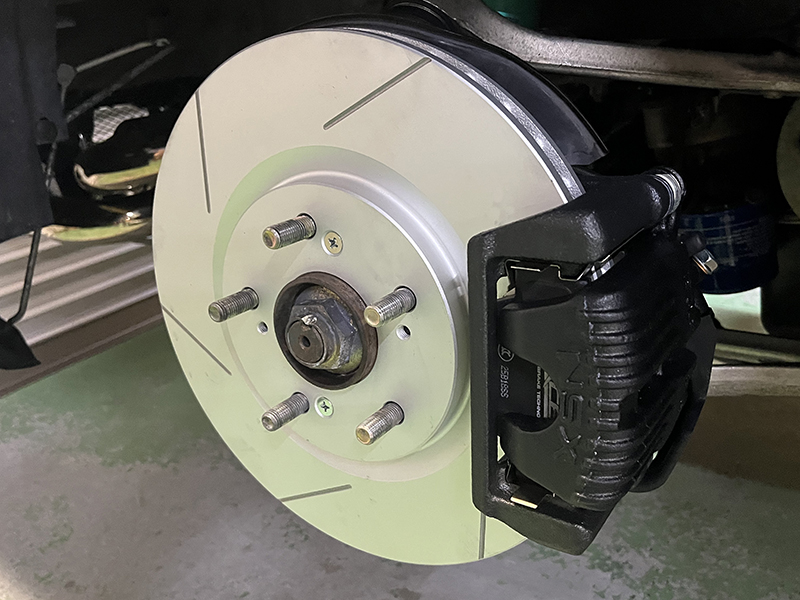
Front Brake Conversion Complete
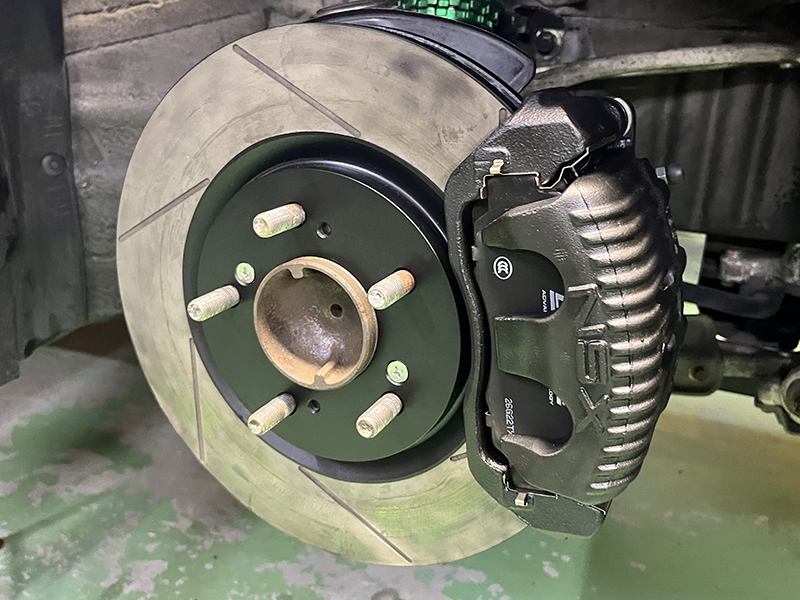
Front Brake Conversion Complete
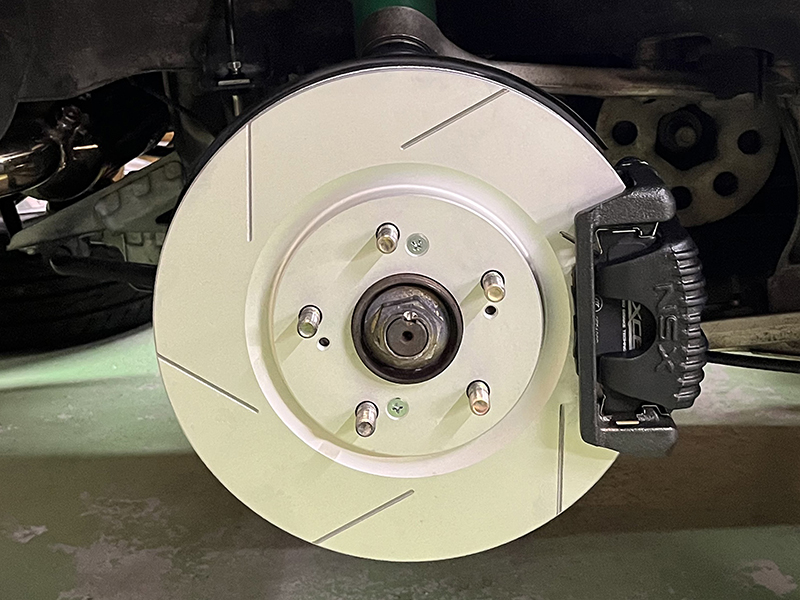
Rear Brake Conversion Complete
Rear Brake Conversion Complete
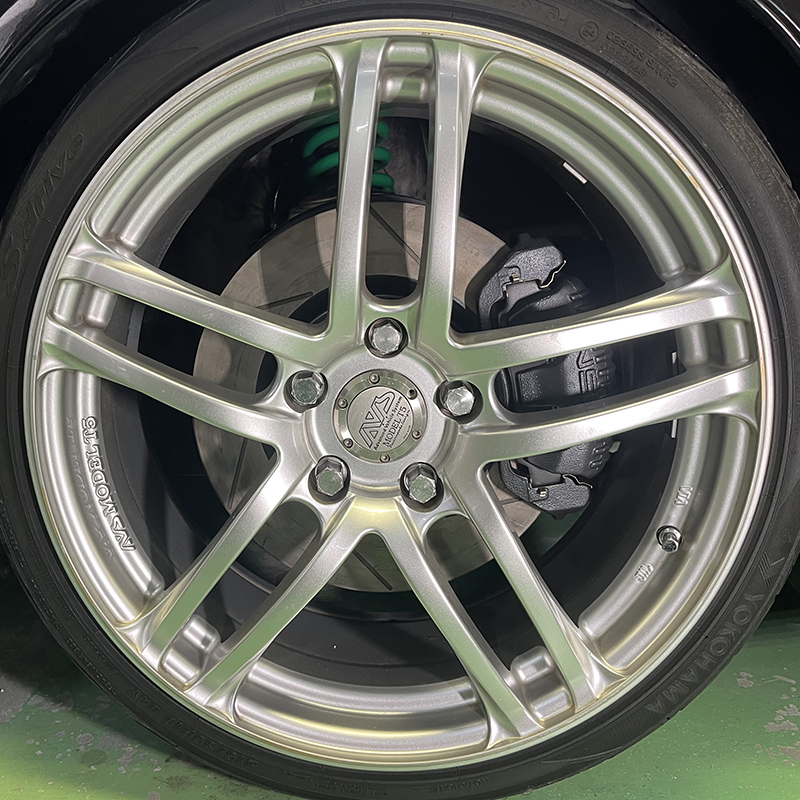
Late-model front brakes with wheel installed
- The front brakes after the late-model conversion, with the wheel installed.
The wheel diameter is 18 inches.
Since the brake rotor diameter has increased by 16 mm, the caliper appears to have been moved outward by 8 mm. It looks a little larger than the early-model setup, but there is still plenty of empty space inside the wheel.
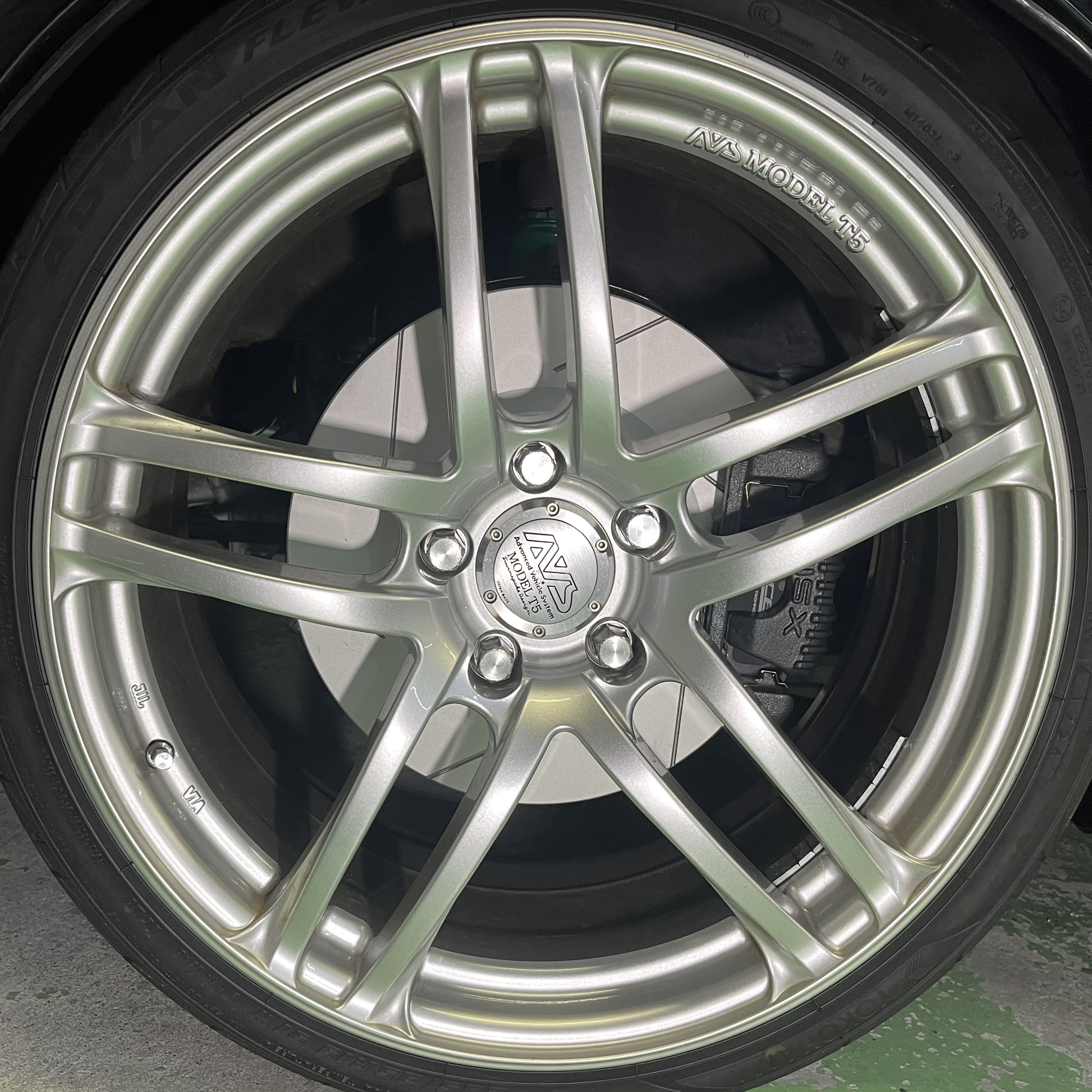
Late-model rear brakes with wheel installed
- The late-model rear brakes with the wheel installed.
The wheel diameter is 19 inches.
The brake rotor diameter has increased by only 5 mm, moving the caliper outward by just 2.5 mm, so the difference between the early- and late-model brakes is hard to see.
Since the rear wheel is larger than the front, there is still plenty of empty space inside it.
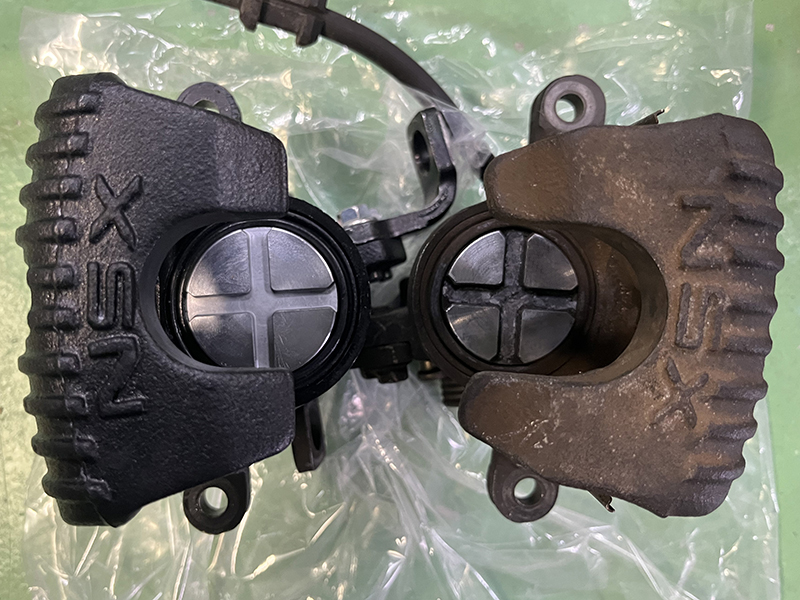
Rear Caliper Piston Comparison
- The biggest specification change between the early- and late-model calipers is the rear caliper piston diameter. Placing the early- and late-model calipers side by side makes the substantial difference in piston size obvious even to the naked eye.
- The service manual specifies a wheel cylinder bore of 42.8 mm, while my caliper measurement of the piston diameter was approximately 42.4 mm. This leaves a dimensional difference of approximately 0.4 mm to be taken up by the piston seal.
- The service manual specifies a wheel cylinder bore of 48.1 mm, while my caliper measurement of the piston diameter was approximately 47.3 mm.
This leaves a dimensional difference of approximately 0.8 mm to be taken up by the piston seal.
That seems like quite a large difference in the clearance between the cylinder bore and piston on the early- and late-model calipers, but I measured them with calipers while they were assembled, so the measurements may not be accurate.
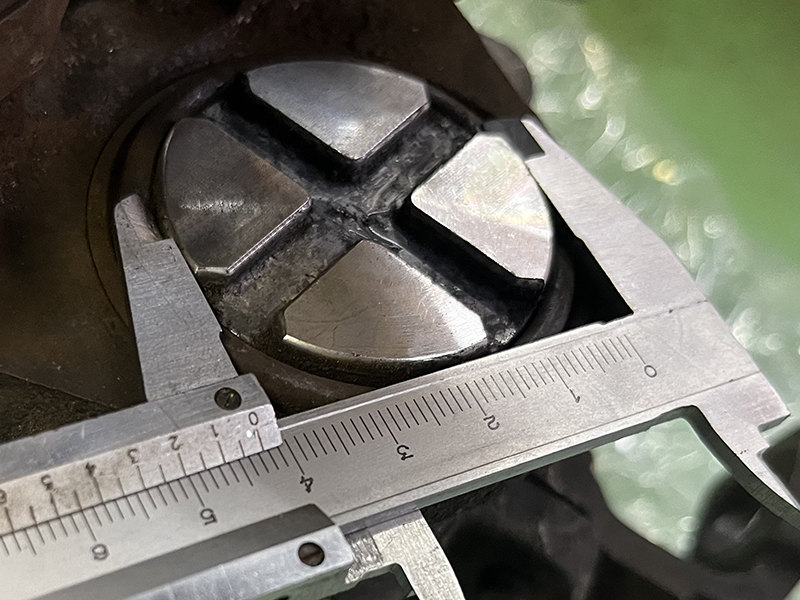
Early rear piston diameter (approx. 42.4 mm)
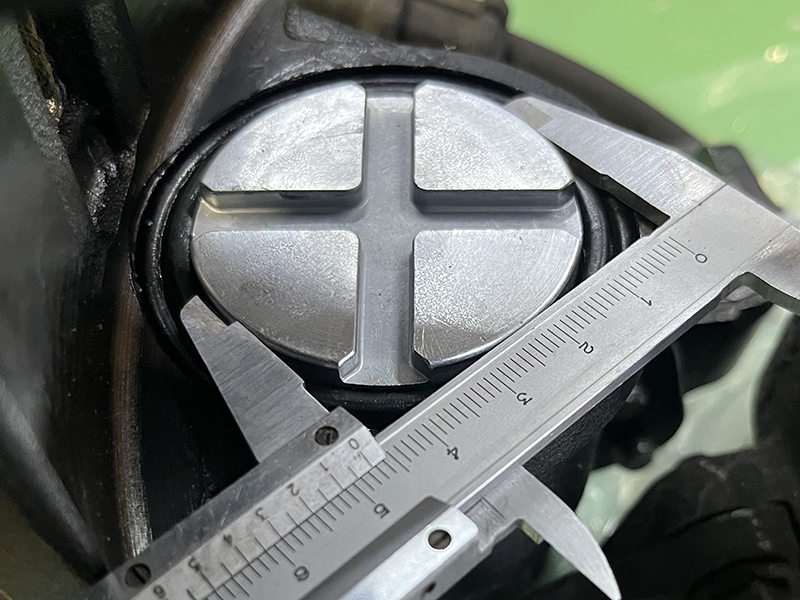
Late rear piston diameter (approx. 47.3 mm)
- I weighed the early-model rotors to compare them with the late-model versions and to have reference figures in case I switch to aftermarket rotors later.
Measured with calipers, the front rotor thickness was approximately 27.5 mm against a standard value of 28 mm, and the rear was approximately 20.6 mm against a standard value of 21 mm. The measured weights were 5.892 kg for the front and 5.416 kg for the rear. - Next, I weighed a used late-model front rotor (for the 02R). Since the scale with finer resolution can only measure up to 6 kg, I used a less accurate hanging scale. Although the rotor was slightly worn (approximately 27.7 mm thick by caliper measurement, against a standard value of 28 mm), it weighed 7.2 kg, about 1.2 kg more than the early-model rotor.
- I also weighed a late-model rear brake rotor (DIXCEL SD). Like the late-model front rotor, it exceeded 6 kg, so I used the less accurate scale. It weighed 6.14 kg, approximately 0.7 kg more than the early-model rotor.
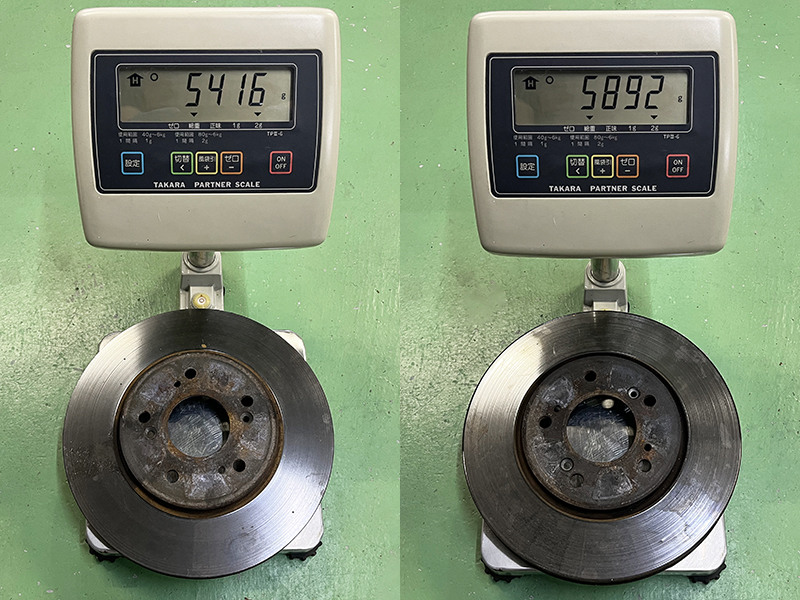
Weighing the early-model rotors
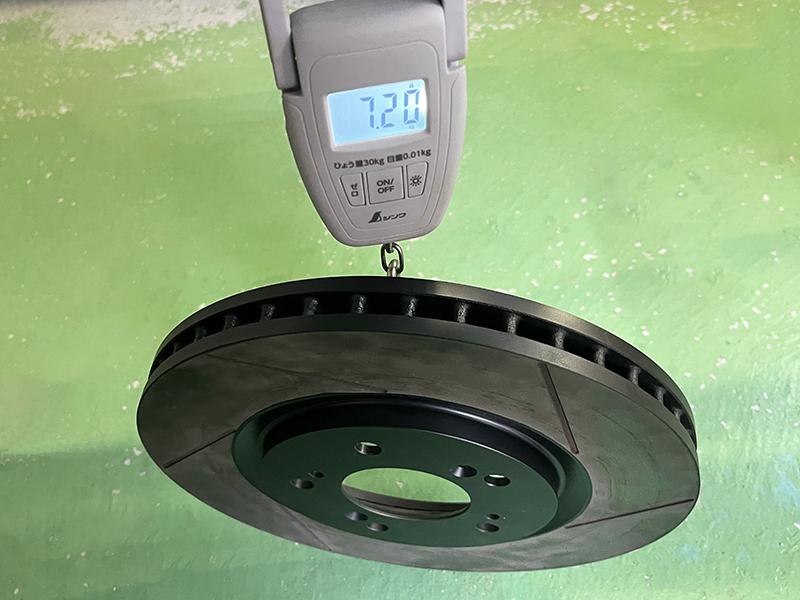
Weighing a used late front rotor (02R)
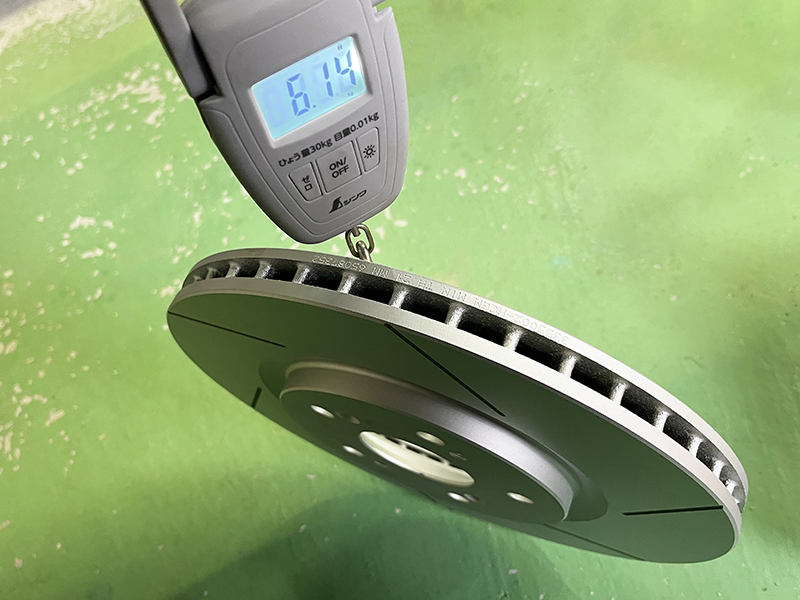
Weighing a late rear rotor (DIXCEL SD)